
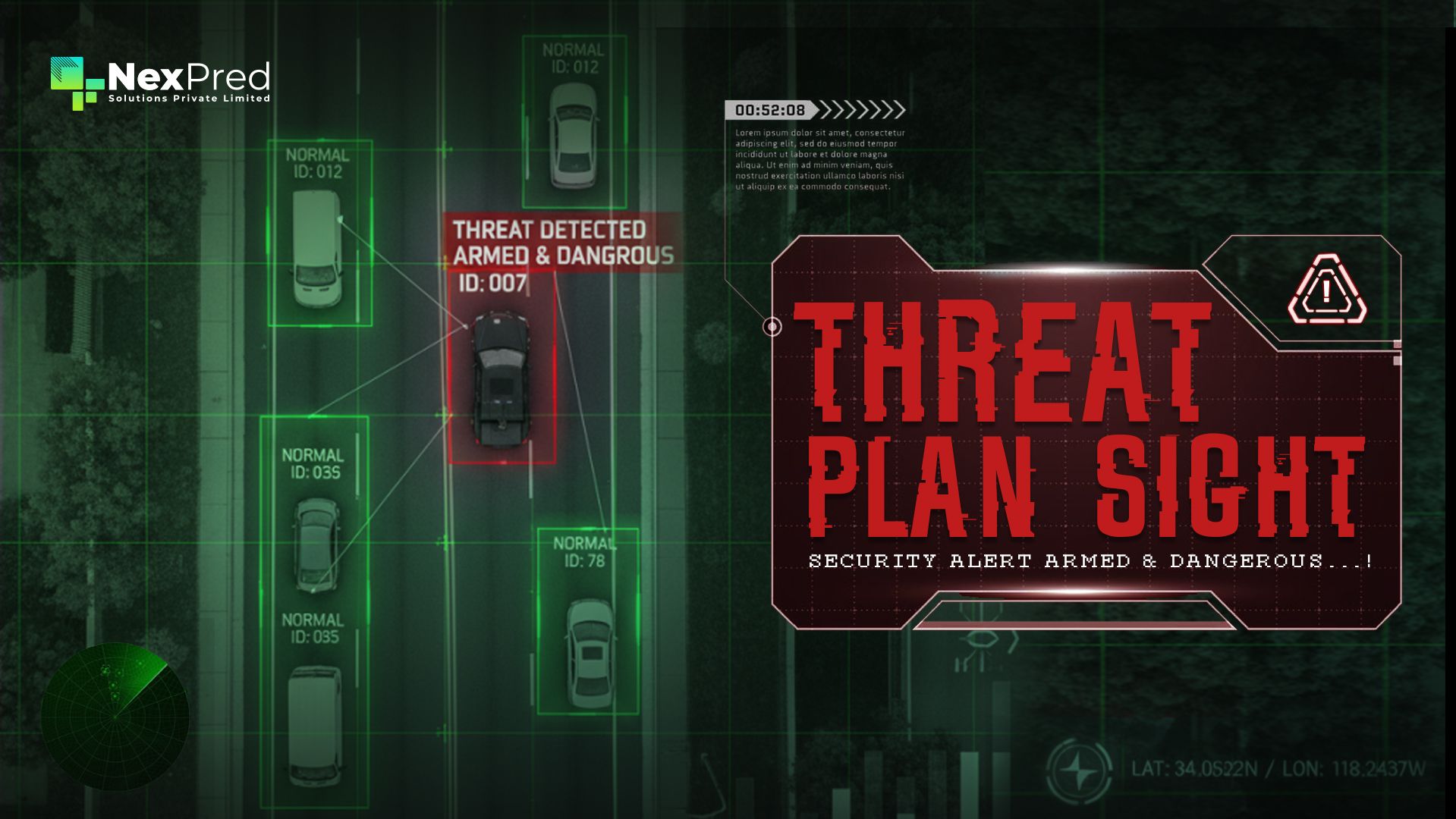

For border guards and security teams, that is the daily challenge. Watching hours of raw video is slow and risky. We set out to build a solution that helps operators spot and classify armed vehicles while the drone is still in the air.
Traditional monitoring systems record video for later review. By the time someone checks it, the moment has already passed. In high-risk areas, that delay can be dangerous.
The challenges were clear:
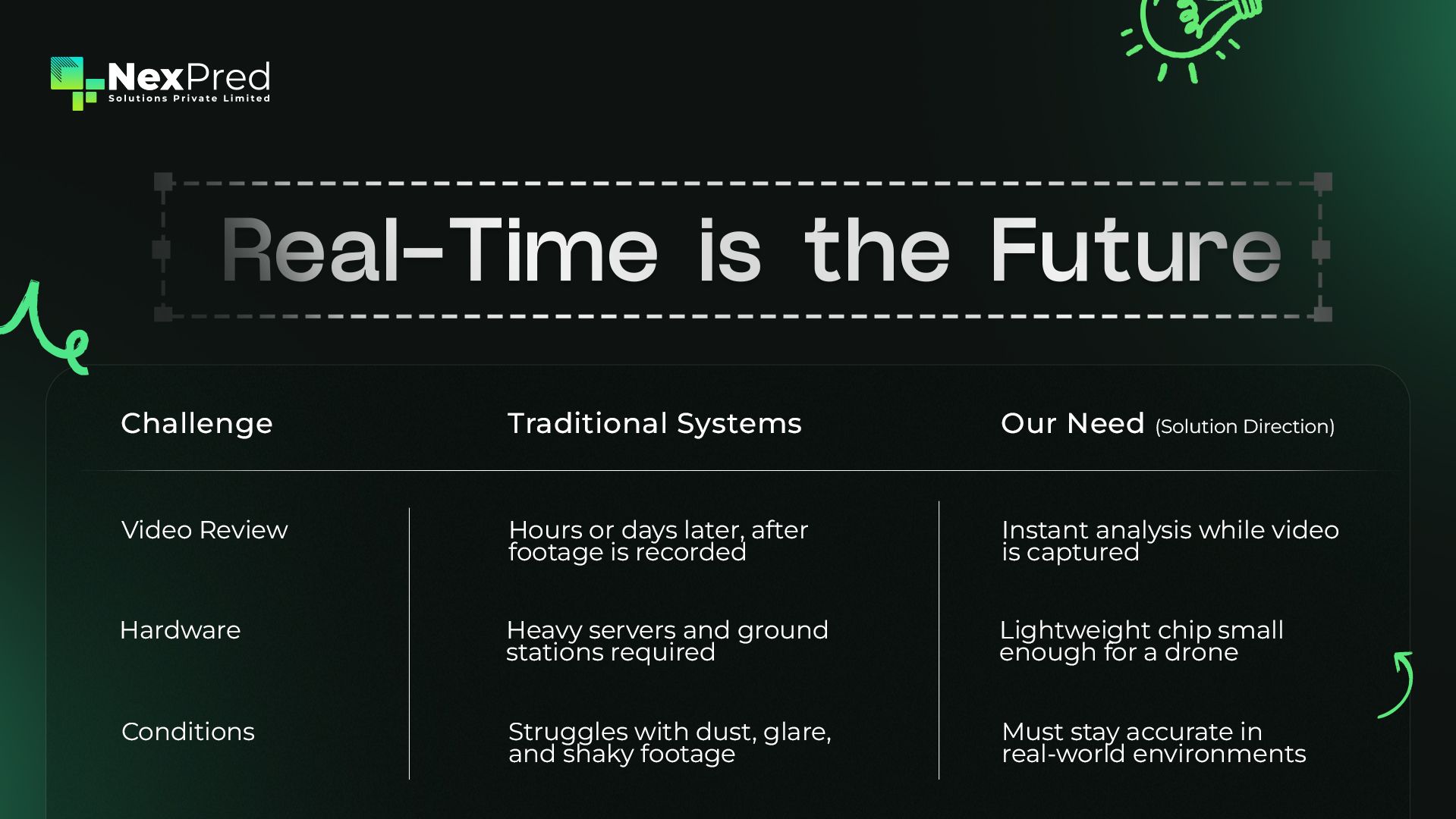
Our goal was simple: give teams a tool that could flag armed vehicles instantly so they could act on the spot.
Instead of sending all video back to a large server for processing, we moved the “thinking” directly onto the drone itself. It’s similar to shrinking a heavy desktop program so it can run smoothly on a smartphone. The drone’s camera captures live video, which is analyzed in real time by a detection model trained on thousands of real-world images. To make the system efficient, the model was compressed and optimized to run on lightweight hardware without losing accuracy. The processed video, complete with clear labels, is then streamed directly to the operator’s goggles or control screen.
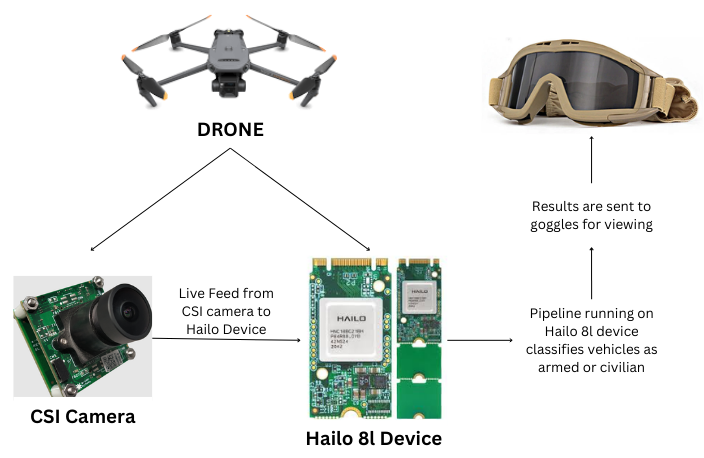
The result? Operators see only what matters, highlighted in real time.
To make this possible, we built a pipeline that runs directly on the drone:
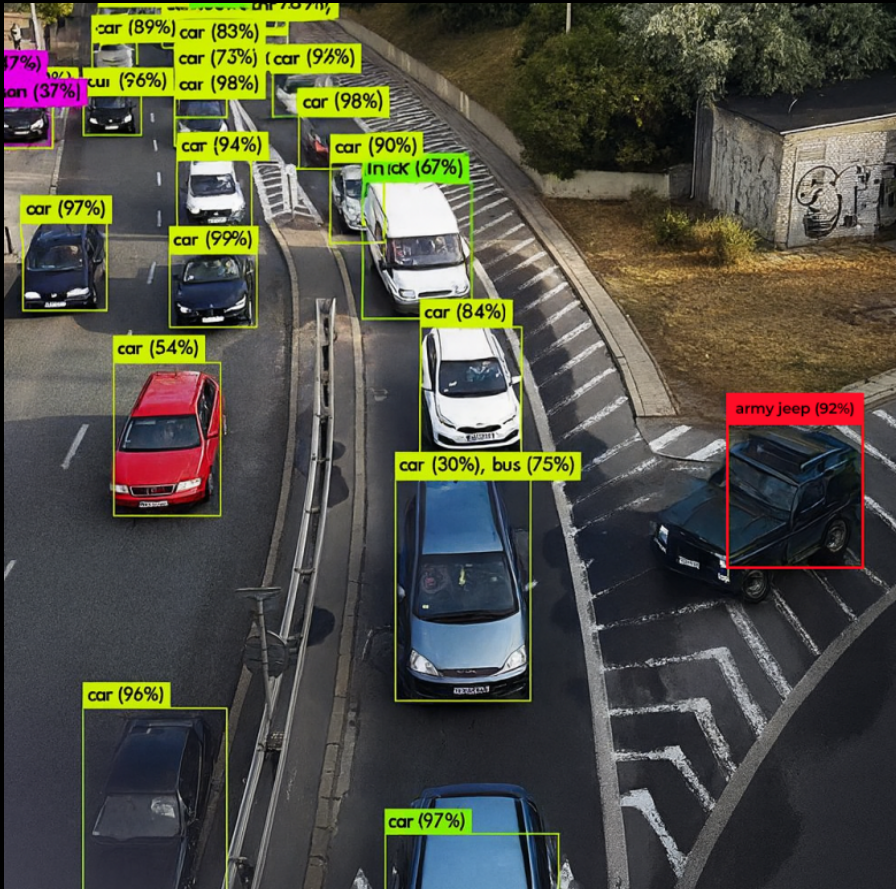
Watch the Armed Vehicles from Drone Footage
This is not just a demo; it’s a working system:
By moving intelligence onto the drone, we eliminated delays and delivered insights exactly when operators needed them.
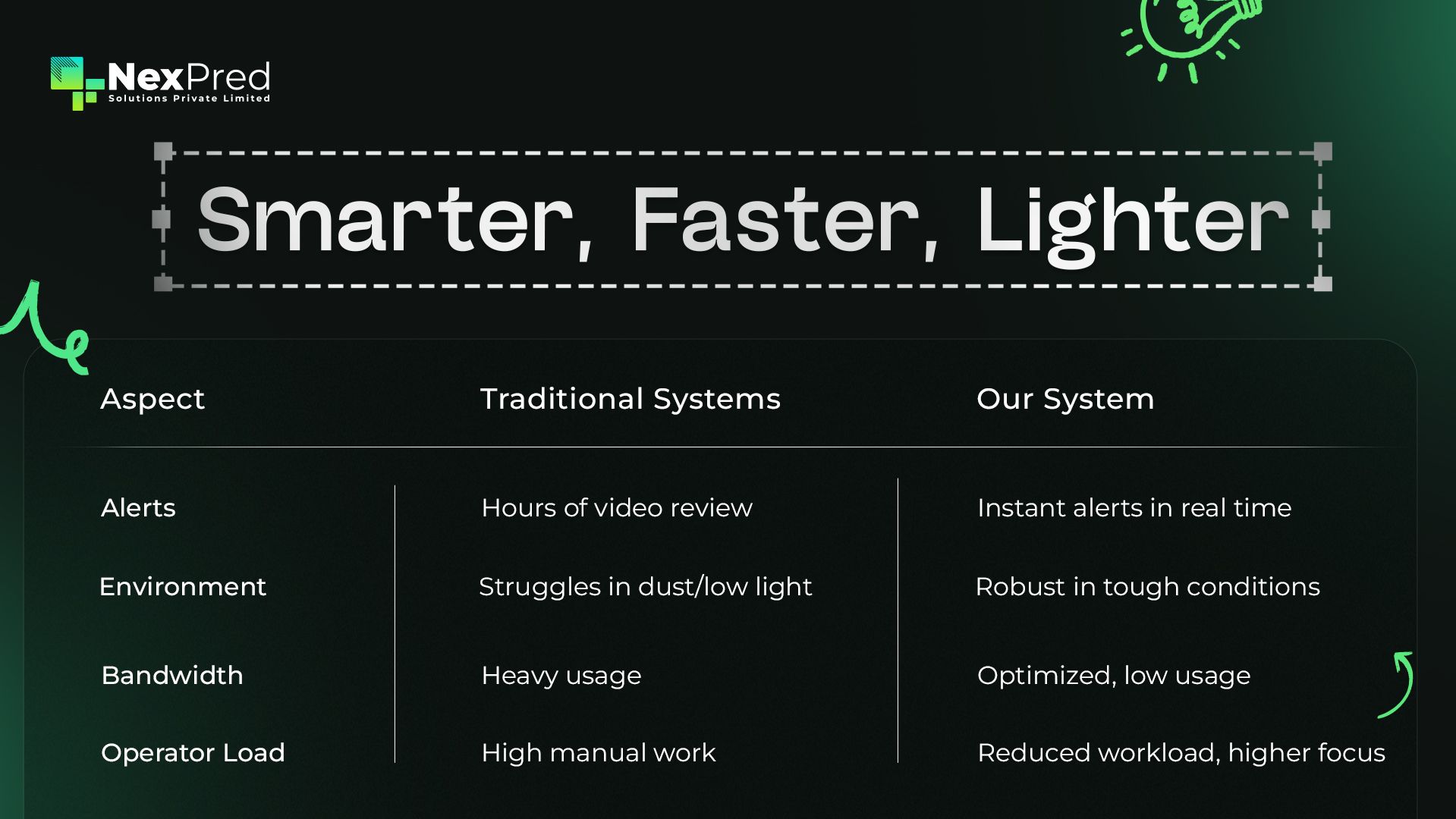
When tested in real conditions, the system delivered clear advantages. Operators received instant alerts rather than spending hours reviewing raw footage, and the detection stayed reliable even under dust, low light, and motion, situations that usually confuse cameras. Because the video was processed directly on the drone, it required far less bandwidth and reduced the risk of communication breakdowns.
In short, the result was faster detection, less manual work, and greater confidence for the people who rely on it.
We are already working on several improvements to make the system more powerful. Training data is being expanded to include a wider variety of vehicle types and terrains. Vehicle tracking is being added so that once identified, a vehicle can be followed across frames. We are also exploring additional sensors such as thermal and radar to maintain accuracy in challenging conditions like night or fog.
Finally, we are simplifying the integration process so the system can be plugged into different drone platforms more easily. Each of these steps brings us closer to a future where early detection becomes faster, more reliable, and accessible in the field.
The future of security isn’t about adding more screens or more manual work. It’s about bringing intelligence closer to the action so teams can respond faster, with greater confidence.
By building detection directly into drones, we showed how the right mix of technology and design can turn a slow, reactive process into a real-time advantage.
At Nexpred Solutions, we are committed to creating systems that are not only innovative but also practical, helping teams protect what matters most without the complexity.

