


Clinical research is one of the most data-heavy and detail-sensitive fields in the world. Writing clinical trial protocols requires accuracy, compliance with strict standards (like M11), and hours of going through endless documents, guidelines, and research papers.
That’s where our journey with AI Medical Writer began. We wanted to help researchers cut down time spent on repetitive writing tasks and let them focus on the real work: advancing healthcare.
Clinical trial protocols are not just lengthy; they’re structurally rigid and must comply with international standards. Each section must follow strict templates, cite peer-reviewed references, and meet regulatory criteria. Researchers spend 2–3 weeks crafting and validating a single draft due to manual research, data verification, and formatting.
The ICH M11 Clinical Electronic Structured Harmonized Protocol (CeSHarP) guideline standardizes how trial protocols are written globally.
It defines every element, from objectives and endpoints to study design, population, and references, with structured formatting and data rules.
While it ensures clarity and consistency, it also introduces massive complexity.
Researchers must:
This process requires deep expertise, precision, and countless review cycles, turning protocol drafting into a multi-week task.
We asked ourselves: Could AI take care of the heavy lifting while keeping researchers in control?
We built AI Medical Writer, a system designed to:
In short, it turns a trial design summary and a simple query into a polished, guideline-ready draft.
Curious to see how it works in real time? Watch our demo of AI Medical Writer:
View the Live Preview of AI Medical Writer

The system runs like a three-step relay race:
Throughout this process, the Investigator Brochure (IB) acts as the anchor document, shaping how the AI interprets trial data, guiding tone and context, and ensuring the report aligns with the official study design and medical background.
Let’s say a researcher wants to draft the “Study Population and Eligibility Criteria” section for a new oncology trial.
Result: A section that previously took 3–4 days to write and verify can now be completed in under an hour, with traceable citations.
This flow means researchers no longer start from scratch. Instead, they receive a well-organized draft backed by real evidence.
At its core, AI Medical Writer uses an agentic architecture powered by:
This combination ensures reliable, traceable, and context-aware writing performance tailored for clinical documentation.
Building AI Medical Writer wasn’t a straight line. Each sprint added new stability, from improving the agent’s ability to interpret medical language to refining how references were fetched and formatted.
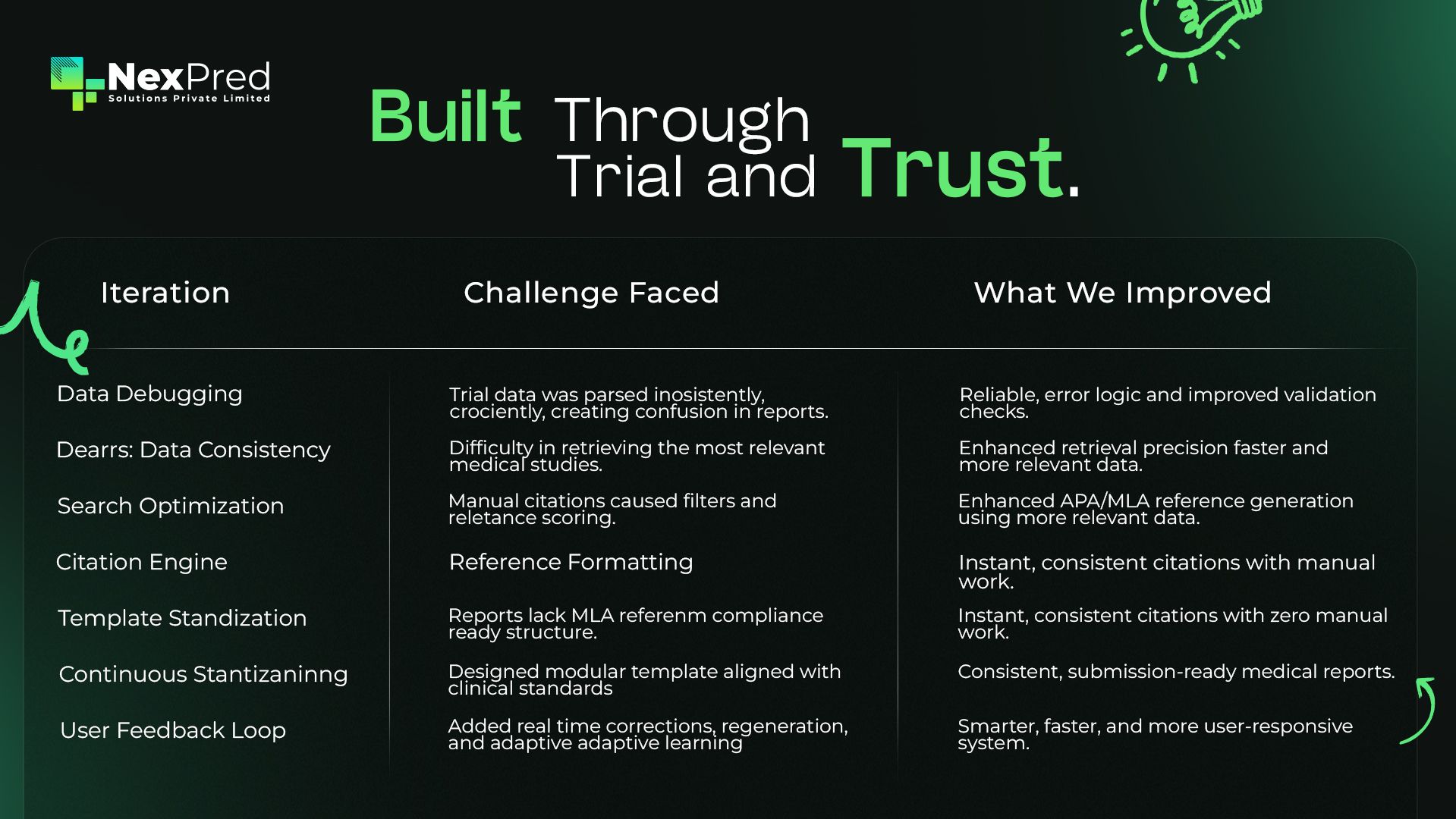
We also faced domain-specific challenges, such as
These hurdles shaped how the system learned to handle complexity without losing accuracy.
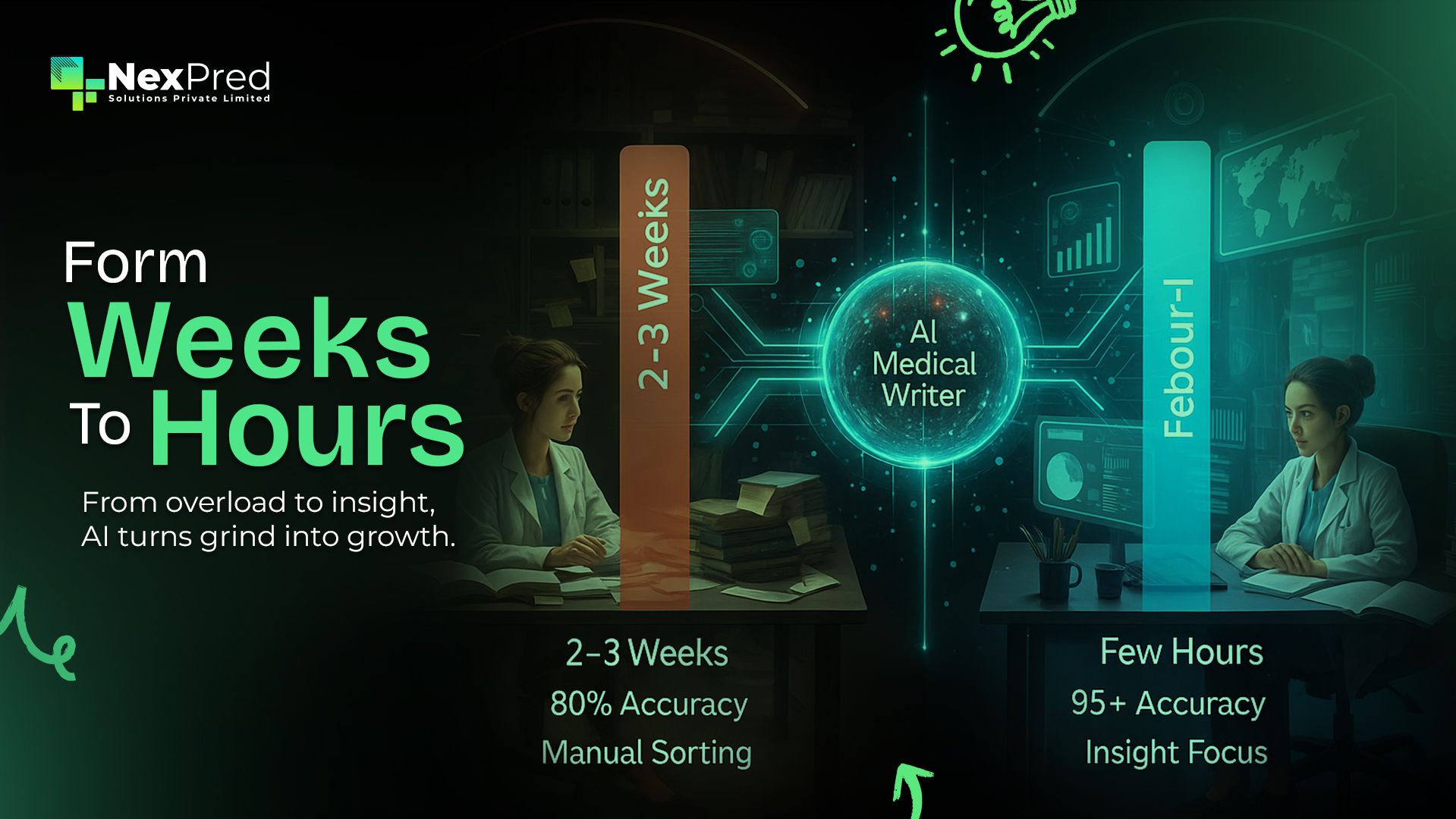
With AI Medical Writer, researchers can:
- Save hours of manual formatting and searching.
- Generate guideline-compliant drafts with trusted references.
- Focus more on insights instead of paperwork.
Before, researchers spent 2–3 weeks crafting and validating a single protocol draft due to manual research, version tracking, and compliance checks.
Now, with automation handling the groundwork, drafts are produced in a few hours, ready for expert refinement.
We’re not stopping here. Our next goals include:
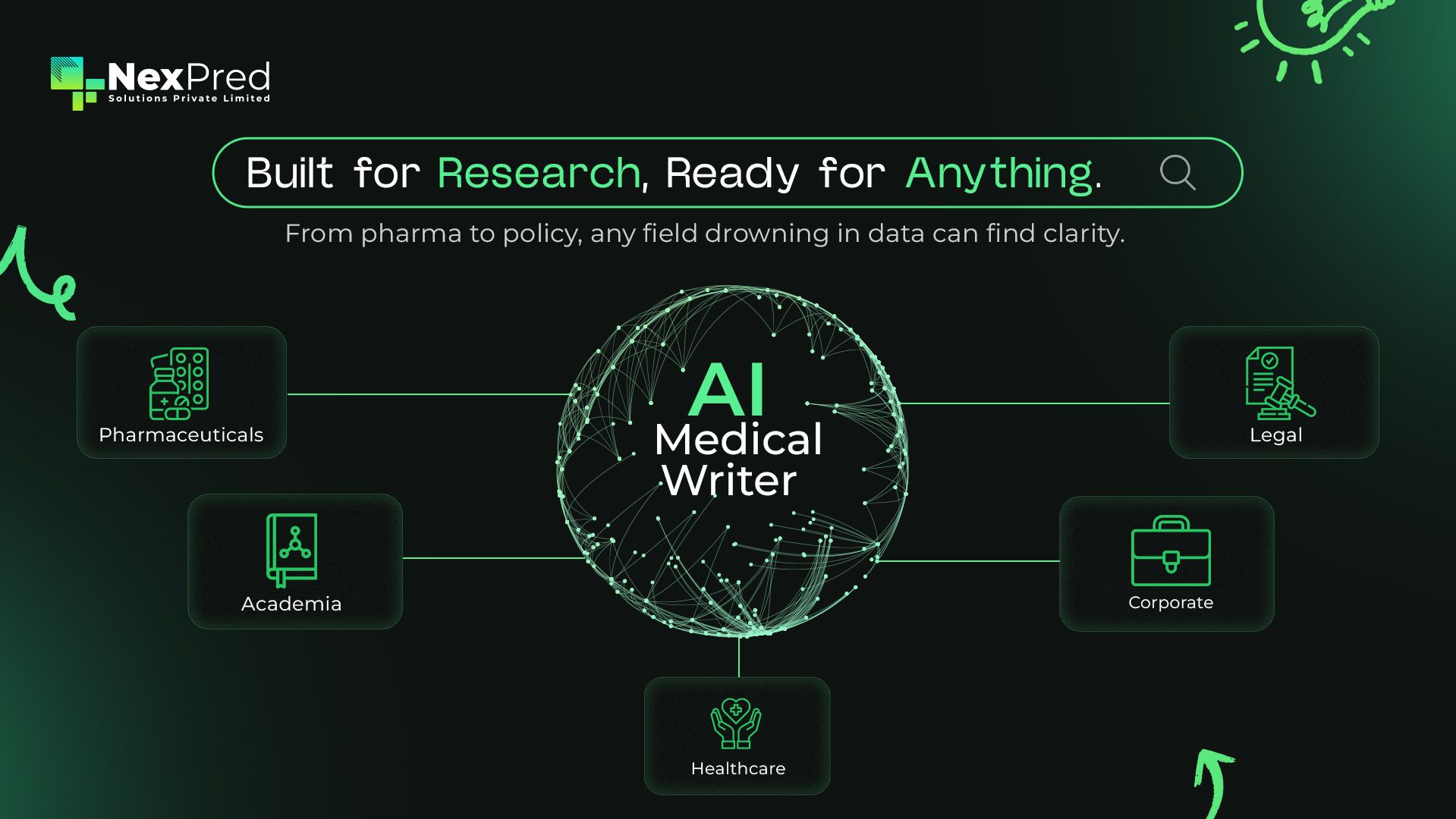
Clinical research is about precision, and AI can support that precision without cutting corners. With AI Medical Writer, we’re proving that AI doesn’t replace researchers; it empowers them.
This project showed us that even the most complex tasks, like writing M11-compliant trial protocols, can be made simpler, faster, and smarter when humans and AI work hand in hand.

