From Reactive AI to Autonomous Agents
Modern AI systems like GPT, Claude, and Gemini are powerful, but they’re mostly reactive. They take an input, generate an output, and stop. They don’t decide what to do next, check their own work, or act independently in the real world.
This is where AI agents come in. Unlike traditional AI, agents are autonomous systems that observe their environment, reason about goals, use tools to act, and adapt based on results. They don’t stop after one step; they keep going until a goal is achieved or they are explicitly stopped.
A Brief History of AI Agents
AI agents aren’t new; they’ve been evolving for decades:
- Rule-based agents: Early expert systems with limited autonomy.
- Learning agents: Reinforcement learning in robotics is adaptive but environment-limited.
- Automation agents: Software bots and RPA tools for repetitive tasks.
- LLM-powered agents: Today’s agents combine reasoning, memory, and tool usage for multi-step, goal-driven workflows.
Core Components of AI Agents
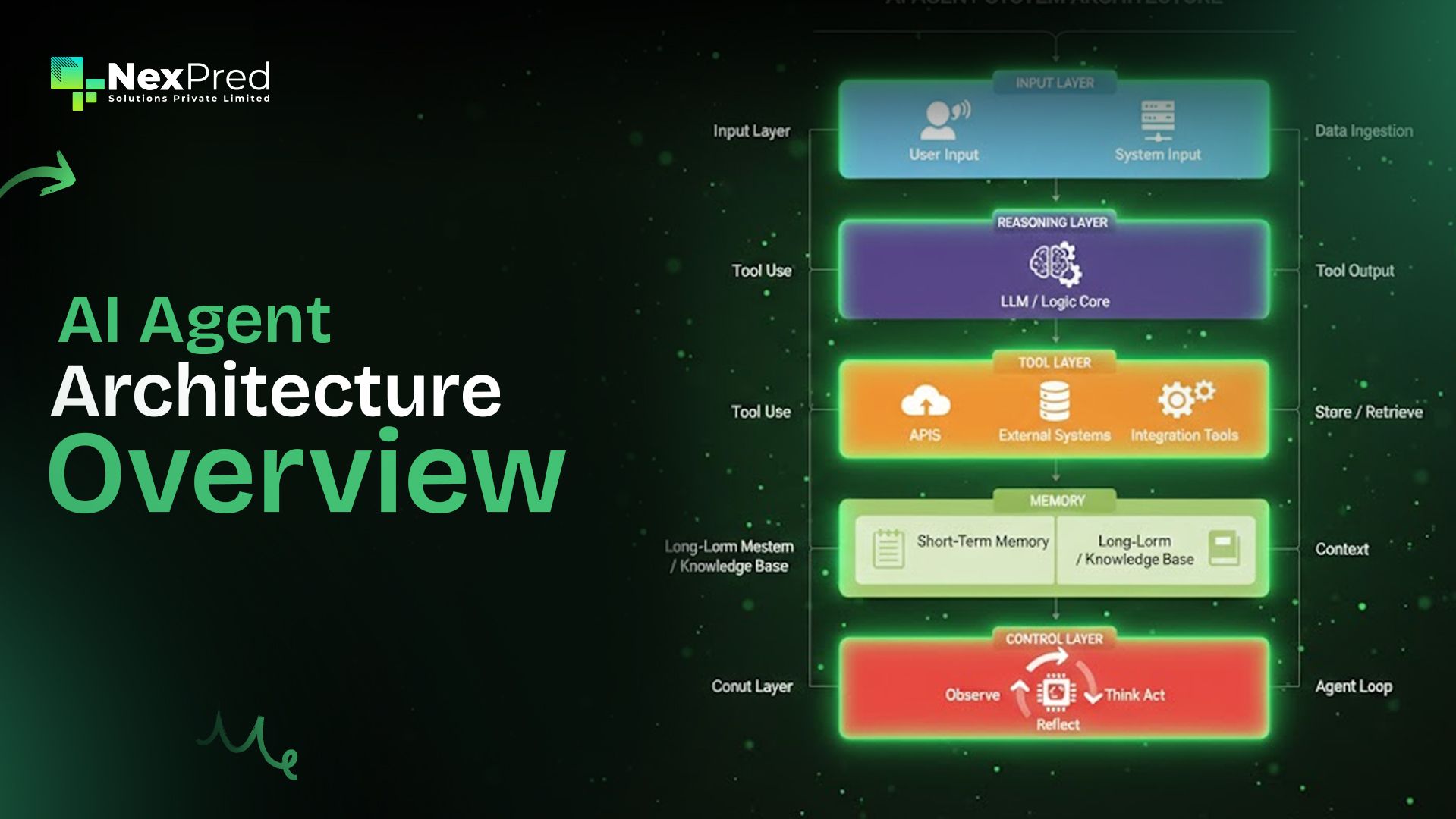
An AI agent is more than just a model; it’s a system with several key parts:
- Reasoning Engine (LLM): Understands goals, plans steps, and chooses actions.
- Memory: Maintains short-term interactions and long-term knowledge.
- Tools & Actions: APIs, databases, browsers, and code environments that agents use to act.
- Control Logic: Governs the agent’s “think-act-observe-reflect” cycle.
- Feedback & Reflection: Evaluates results and adjusts behavior for better performance.
These components work together to create agents that are not just intelligent but autonomous and adaptive.
How AI Agent Architecture Works
AI agents follow a continuous execution cycle:
- Observe: Collect input from users or systems.
- Think: Plan next steps using the reasoning engine.
- Act: Execute tools or actions.
- Store: Save results and context in memory.
- Evaluate: Check progress toward the goal.
- Iterate or Stop: Repeat or finish the task.
This loop allows agents to handle both simple one-off tasks and complex multi-step workflows.
Single-Task vs Multi-Agent Systems
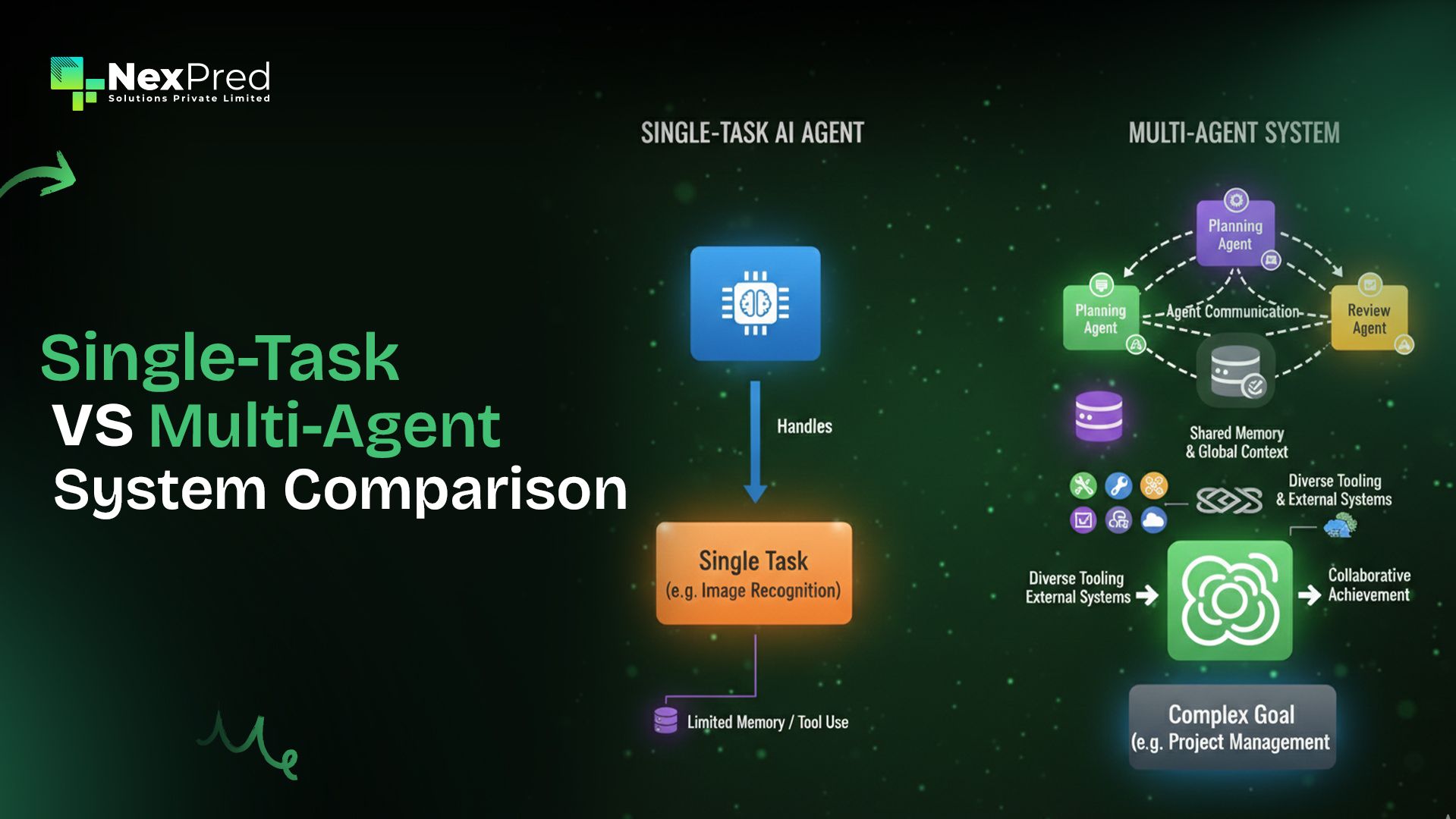
- Single-task agents handle one defined function. Simple, predictable, and cost-efficient, but limited in scope.
- Multi-task agents can handle multiple related tasks, sharing memory and planning steps.
- Multi-agent systems involve several specialized agents collaborating, communicating, and coordinating workflows.
The shift from single-task to multi-agent systems enables scalable, fault-tolerant, and outcome-driven automation.
The Context Problem
As agents multiply, context management becomes critical. Context includes:
- User goals and constraints
- Previous actions and results
- Available tools and their capabilities
- System state and permissions
Without standardized context handling, agents can make mistakes, perform unsafe actions, or fail to scale effectively.
Introducing Model Context Protocol (MCP)
MCP is a standardized protocol that solves the context problem. It defines how AI agents interact with external tools, data, and systems securely and consistently.
Think of MCP like HTTP for AI agents: just as web clients and servers communicate using a standard protocol, MCP standardizes interactions between agents and the systems they rely on.
Benefits of MCP:
- Standardized tool access
- Secure and permission-based execution
- Reusable integrations across multiple agents
- Easier monitoring and governance
MCP Architecture Simplified
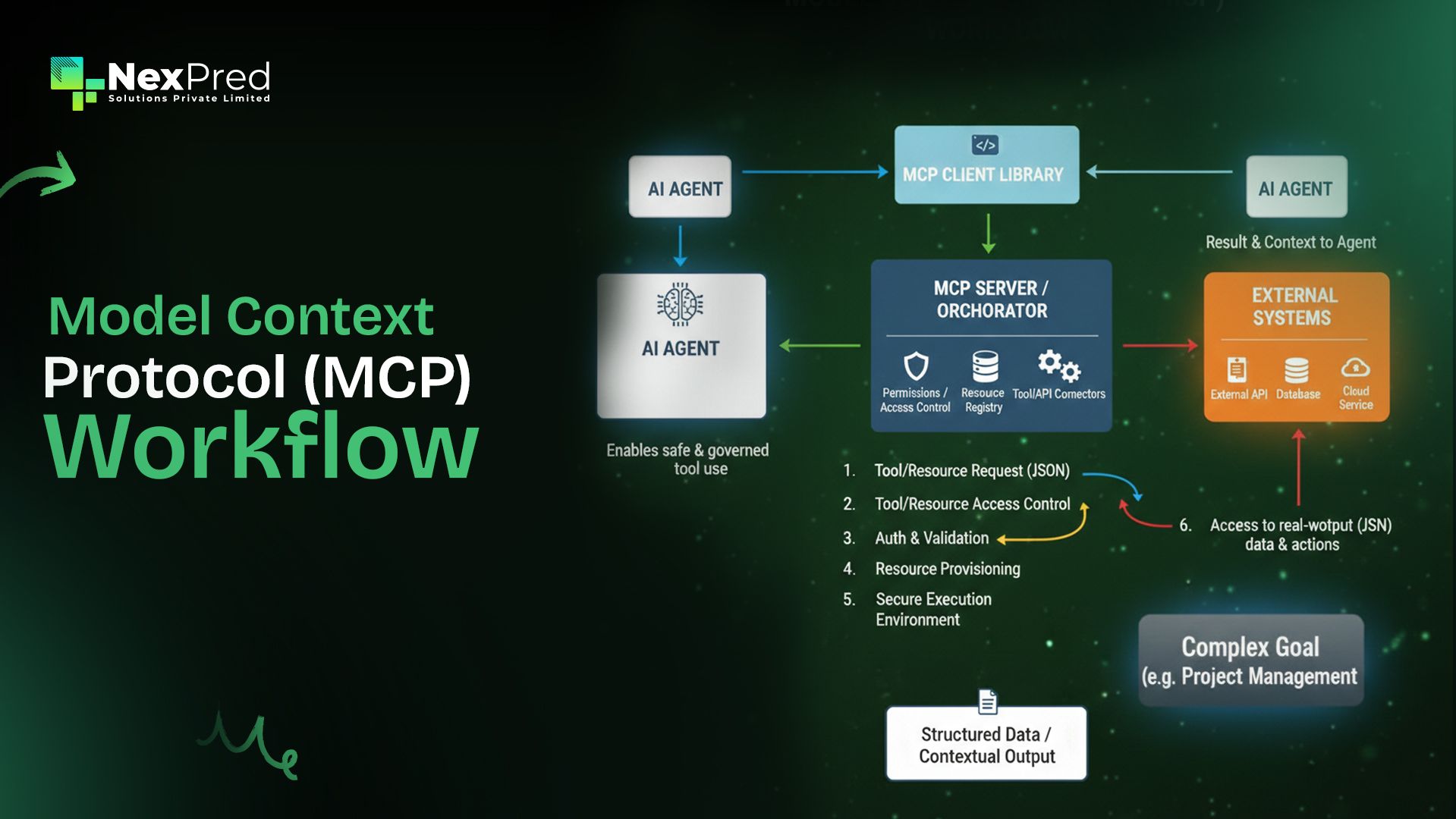
MCP uses a client-server model:
- AI Agent/Host: Runs the agent logic and reasoning engine.
- MCP Client: The agent’s interface to request tools or context.
- MCP Server: Exposes tools, APIs, and data securely.
- External Systems: Business services, databases, and infrastructure.
Agents query MCP to discover tools, execute actions securely, and receive structured results, turning intelligence into reliable action.
Real-World Applications
AI agents with MCP are already transforming industries:
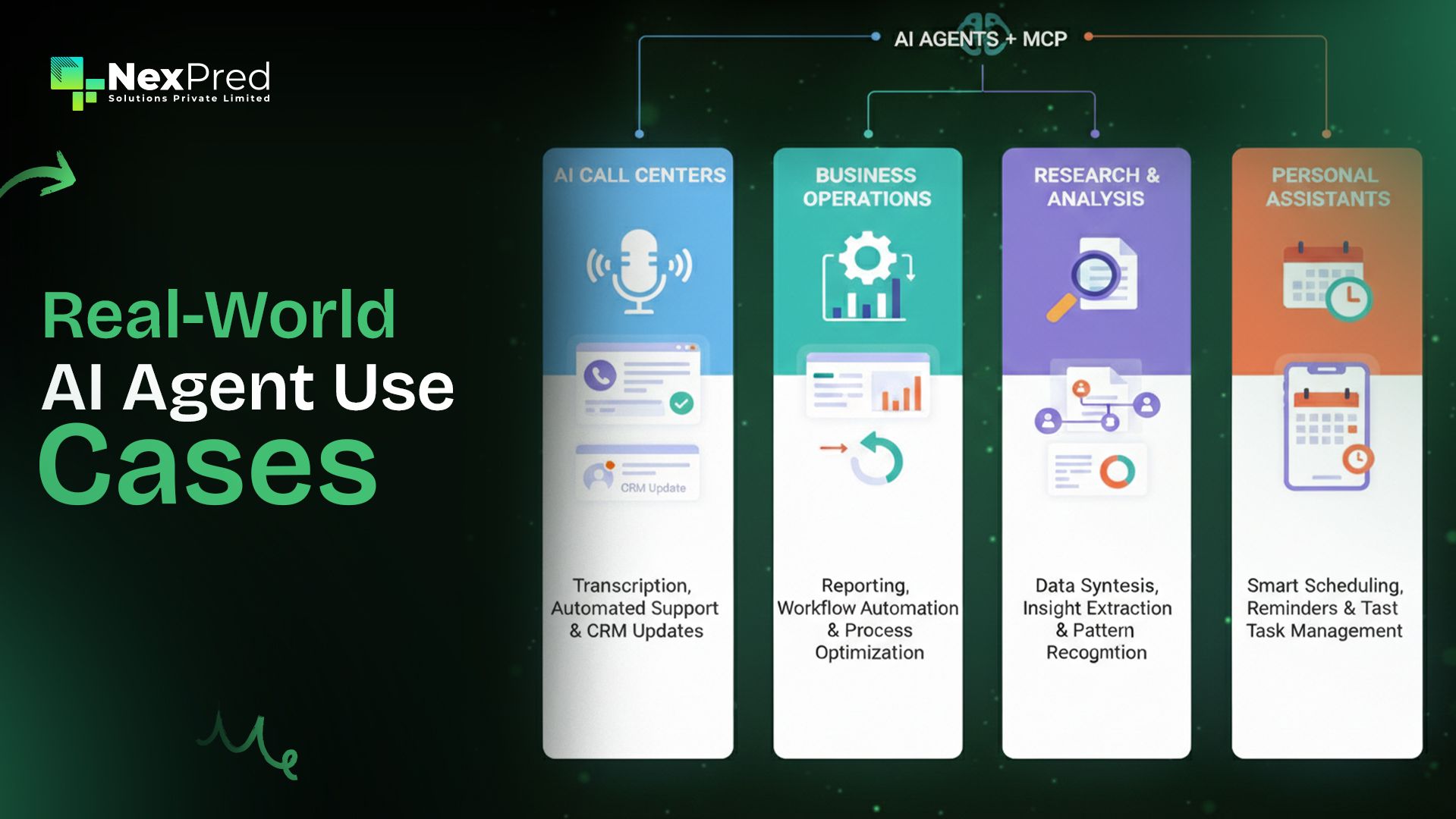
- AI Call Centers: Transcribe calls, summarize issues, and update CRMs.
- Software Development: Generate code, test, and deploy automatically.
- Business Operations: Automate reporting, emails, and workflows.
- Research & Analysis: Summarize literature, extract insights, and generate reports.
- Personal Assistants: Schedule tasks, plan travel, and send reminders.
With MCP, these systems are secure, scalable, and efficient, reducing manual effort and improving operational consistency.
Challenges and Design Considerations
Responsible agent design balances autonomy with safety:
- Permission-based tool access
- Validation of inputs and outputs
- Monitoring and logging
- Human oversight for critical decisions
MCP helps mitigate risks by providing controlled execution and standardized schemas.
The Future of Agentic AI
Trends shaping the next generation of AI agents:
- Wider adoption of standardized protocols like MCP
- Enterprise-scale adoption with stronger governance
- Multi-agent collaboration and reusable agent ecosystems
- Advanced memory systems for long-term context
- Agents acting as digital workers, seamlessly collaborating with humans
The vision is autonomous, outcome-focused AI systems that are reliable, controllable, and interoperable across platforms.
Conclusion
AI agents are changing the way machines perform work. Combined with MCP, they move beyond reactive responses to goal-driven, autonomous systems. This is the foundation for scalable, reliable, and enterprise-ready AI solutions, enabling real-world automation that adapts, learns, and delivers measurable outcomes.